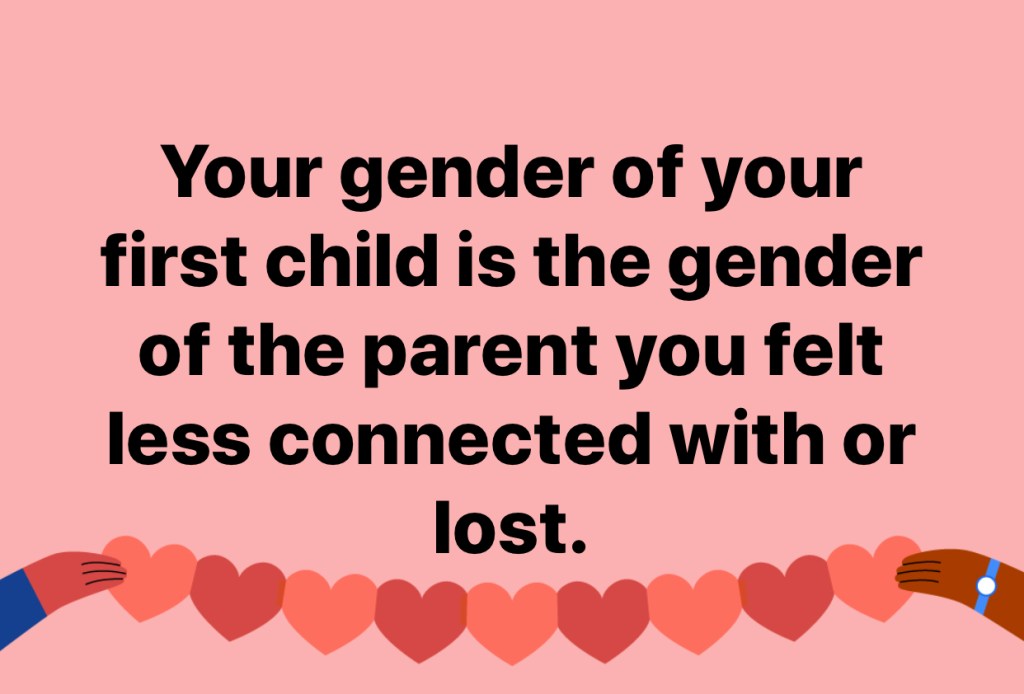
Sometimes, becoming a parent feels like meeting someone new while remembering someone you have missed for a very long time. You hold your daughter and think of your mother. You look into your son’s face and feel an ache for your father. In the middle of welcoming this little person, an old part of your heart seems to wake up.
Perhaps this is why the idea that your first child reflects the parent you lost or felt disconnected from can feel so personal. Through a spiritual lens, that resemblance can become a symbol of connection: an invitation to notice the love, grief, and longing your family story still holds.
You do not have to turn that feeling into a rule for every family. Spiritual meaning can be intimate. A moment can speak to your heart without explaining everyone else’s life. What matters here is what the connection brings forward for you, and how you choose to meet it.
The spiritual connection between your first child and the parent you miss
If your first child is a daughter and your relationship with your mother was painful, you may find yourself imagining the closeness you once wished for. You might want your daughter to feel comfortable coming to you, to know that her feelings have a place, and to hear words you still wish someone had said to you.
If your first child is a son and your father was absent or has passed away, small moments may feel unexpectedly meaningful. A laugh, a gesture, or the way your child reaches for you might bring a memory close. You may experience that moment as a reminder of love, a continuing bond, or a quiet connection to your family’s story.
These feelings can also arise when your child’s gender does not match the parent you miss, or with a later child or grandchild. You are free to find the symbolism that feels true to your experience without searching for a pattern that has to fit.
When a new beginning touches an old longing
You may have expected parenthood to bring joy and tiredness. You may not have expected it to bring you back to the child you used to be. Then one evening you comfort your little one, and you realize how much you needed that same tenderness. For a moment, the present and the past seem to sit beside each other.
From a spiritual perspective, you might understand this as an invitation to turn toward a part of yourself that has been waiting to be heard. Perhaps your inner child is asking for gentleness. Perhaps grief is asking for a place at the table. Perhaps you are discovering that love for your child and longing for your parent can exist in the same breath.
There is no need to rush toward a lesson. Some days, the connection may feel comforting. Other days, it may leave you wishing your parent could be there for an ordinary afternoon. You can let the meaning unfold without demanding that your sadness become wisdom immediately.
Understanding family energy through a chakra-inspired lens

If chakra practices resonate with you, they can offer a spiritual language for exploring what these moments stir. You might imagine your energy as something you bring attention to through reflection, intention, and ritual. The purpose of the practices below is to make space for your experience, without judging it as good, bad, or spiritually incomplete.
Rather than asking which part of you is broken, ask: “Where am I longing for support? Where do I feel love? What have I not been able to say?” Let the chakra themes become gentle doorways into those questions.
Root chakra: finding a place to belong
In this practice, the root chakra represents grounding, family roots, and belonging. Losing a parent or feeling emotionally distant from one may leave you wondering where you can fully settle. You might be creating a home for your child while still longing for the feeling of being held yourself.
Sit somewhere comfortable and notice the support beneath you. If it feels right, imagine roots reaching into the earth. Think about what you want home to feel like: steady, welcoming, honest, or peaceful. Then choose one small way to bring that intention into your day.
A reflection to carry with you: “I can honor where I come from while creating a place where I belong.” You do not need to reject your whole family story to choose what you want to nurture within it.
Heart chakra: letting love and grief share space
The heart chakra can symbolize the meeting place of love, compassion, and longing. Perhaps you feel your parent’s absence most strongly when you watch your child do something wonderful. You want to share the moment, and the person you want to tell is unavailable. That ache deserves tenderness.
Place a hand over your heart if that feels comforting. You might remember something you loved about your parent, name something you wish had been different, or simply sit with the feeling. There is room for a complicated relationship here. Love does not require you to erase hurt, and compassion does not require you to force forgiveness.
Your intention might be: “I can welcome love without pretending I have never been hurt.” Let those words be an invitation, rather than something you must already know how to do.
Sacral chakra: allowing your feelings to move
In this reflection, the sacral chakra offers a symbol for emotional flow and creativity. You may feel grateful, angry, hopeful, and sad within the same afternoon. Instead of deciding which feeling you are allowed to have, consider giving each one a little room.
You could write a letter, draw, listen to a meaningful song, or move gently in a way that feels comfortable. You are expressing what is present. There is no need to produce a beautiful result or make a powerful spiritual experience happen.
Throat chakra: giving your story a voice
The throat chakra can represent the words that were difficult to speak in your family. Maybe you learned to keep the peace, avoid questions, or hide disappointment. Becoming a parent may bring a new wish to communicate more openly.
Start somewhere private or with a trusted adult: “I miss you.” “I needed more closeness.” “I want to respond differently with my child.” Speaking honestly can be quiet. A journal entry or an unsent letter can hold words you are not ready to share.
Solar plexus chakra: choosing the energy you want to bring forward
As a symbol of personal agency, the solar plexus chakra can help you reflect on the kind of presence you want to offer. You might choose patience, honesty, warmth, or the willingness to apologize. These intentions become meaningful through ordinary actions: listening, repairing a misunderstanding, or asking for help when you are overwhelmed.
If you think of yourself as changing a generational pattern, allow that work to be human. One difficult moment does not erase your intention. You can return, reconnect, and try again.
Creating a quiet ritual with chakra-inspired oils
A personal ritual can give these reflections a place in your week. Choose a comfortable space, put away distractions for a few minutes, and select one intention. You might light a lamp, open a journal, or keep a meaningful photograph nearby. You can also begin with nothing more than a quiet pause.
If scent is part of your spiritual practice, we offer chakra-inspired oils in our SelfLoveBodyCareLLC shop. You might choose a fragrance you enjoy and let it become a personal reminder of grounding, compassion, or honest expression. The ritual belongs to you, whether you include an oil or keep the moment simple and fragrance-free.
Use any oil according to its label and keep it out of children’s reach. During your reflection, you might ask: “What part of my family story needs tenderness today?” Stay only as long as feels comfortable, then return to an ordinary act of care.
Let your child be a connection, without carrying your unfinished story
You can cherish a spiritual connection and still allow your child to be their own person. They may remind you of someone you miss, but they do not have to take that person’s place. Their personality, feelings, and future deserve room to unfold.
Perhaps the gift of the connection is what it invites you to notice within yourself. You can seek adult support for your grief, make space for the younger version of you, and offer your child love without asking them to resolve what happened before they arrived.
A new chapter with room for remembrance
Your first child may feel like a bridge between the family you came from and the family you are creating. Through a spiritual lens, that bridge can hold remembrance, intention, and hope. You can honor your ancestors or a parent’s memory while choosing the qualities you want to carry into this new chapter.
Ask yourself: “What love do I want to pass on? What pain deserves care? What can I offer myself today?” You do not need a perfect answer. Sometimes the most meaningful beginning is simply noticing what your heart has been trying to say.
Your child’s arrival can be sacred to you without making your child responsible for your healing. There is room to love them as themselves, remember the parent you miss, and give your own spirit a little gentleness along the way.


Leave a Reply