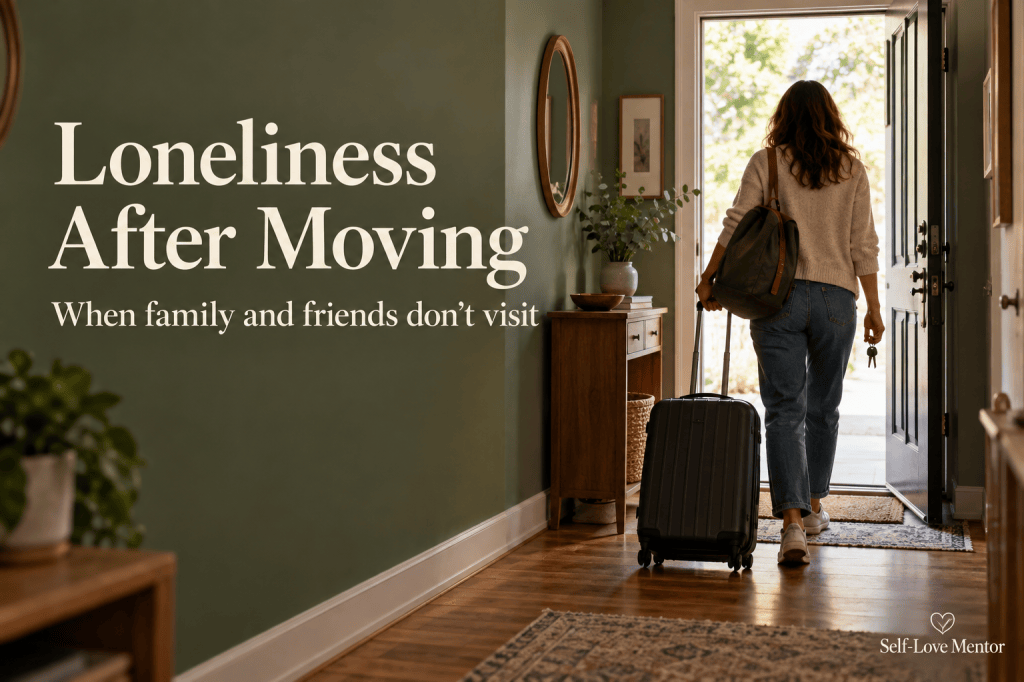
I knew moving away would put miles between me and the people I love. I knew I would miss familiar faces, ordinary visits, and the comfort of being around people who already knew me. What I did not expect was how lonely it would feel to be the one trying so hard to keep those connections alive.
I live somewhere different now, but a part of me keeps thinking: I am still here. I still want to be included. I still want people to come see me. I want the distance between our homes to leave room for closeness between us.
The hardest part is feeling like I have to keep reaching out, keep asking, keep making the trip. I want someone to think of visiting on their own. I want a call that I did not have to initiate. I want to feel missed in a way that becomes effort.
That is the part of loneliness after moving that I want to talk about: how it feels when I miss my people, but I am tired of being the one responsible for bringing us together.
I moved away, but I did not move on from the people I love
Changing states did not change how much these relationships mean to me. My address changed. My need for closeness did not.
There is a difference between choosing to live somewhere else and choosing to become disconnected. I can make a decision about where to build my life and still hope the people I love will stay interested in that life.
Sometimes I wonder whether moving made it easier for people to assume I am fine on my own. Maybe they see that I am handling my responsibilities and think I have everything I need. But being capable does not mean I never feel lonely.
I can get through a workday, take care of what needs to be done, and still wish someone would call just to ask how I am doing. I want connection that reaches beyond updates and logistics. I want room to say that some days this is harder than it looks.
Why always being the one to reach out hurts
Reaching out is something I do because I care. I want to know how people are doing. I want to stay part of their lives. But when I feel like I am almost always the one beginning the conversation, that caring starts to come with questions.
Would we talk as much if I did not call? Would anyone make plans if I stopped suggesting them? Am I keeping us close, or am I trying to hold a closeness that has changed?
Those questions hurt because I do not want my relationships to become something I measure. I do not want to count messages or keep score. I want to feel that someone else notices the distance and wants to close it, too.
A response can mean a lot, but being thought of first means something different. I want to know that I cross someone’s mind even when my name has not just appeared on their screen.
I want someone to visit without my having to keep asking
There is a particular kind of comfort in knowing someone wants to come into my world. I want people to see where I live now, spend time with me here, and make memories in a place that has become part of my life.
I do not need every visit to be an event. The ordinary things matter: sitting together, sharing a meal, talking without watching the clock. Being in the same room can mean more than having a perfectly planned weekend.
What I long for is initiative. Someone saying, “I have been thinking about coming to see you. What weekend works?” Someone helping choose a date instead of leaving the idea with me.
When that does not happen, it can leave me feeling as though my presence is wanted only when I make myself available in everyone else’s space. I know that feeling may not tell the whole story of what someone intends. But it still tells me something important about what I am missing.

The trip takes effort, even when I am glad to see everyone
The distance can sound manageable when someone else is describing it. For me, visiting also means the return trip, the time, the cost, and whatever I need to arrange before I leave.
I can be excited to see people and still feel tired by the effort involved. Both feelings belong in the same conversation.
When the expectation is always that I will come back, I can start feeling as though my time is more flexible or my responsibilities are easier to work around. I want the effort I make to be recognized, even if someone cannot make an equivalent trip.
I do not need every relationship to be perfectly equal in miles or money. I do need to feel that staying close matters enough for the other person to contribute in ways they can.
I can understand their circumstances and still feel disappointed
I know other people have lives, responsibilities, and limitations. Travel may be difficult because of money, health, caregiving, or work. I do not want to assume that every absence means a lack of love.
But understanding can become painful when I use it to dismiss my own feelings. I can explain everyone’s circumstances so thoroughly that there is no space left to acknowledge my disappointment.
I am trying to make room for both. Someone may have a valid reason they cannot visit. I may still need a phone call, a thoughtful check-in, or a conversation about how we can stay connected.
When I think about reciprocity, I am thinking about care that takes some initiative. A person who cannot travel can still ask about my week. Someone with limited time can still help find a moment that works. I want to notice those efforts, too, rather than letting one unmet hope erase every other form of connection.
How I can talk about feeling forgotten
Part of what makes this difficult is that I wish I did not have to explain it. I want the invitation or the call to happen naturally. Asking can feel like it takes away the very thing I wanted: to know someone thought of me on their own.
Still, I do not want unspoken expectations to be the only way my relationships are evaluated. I can give someone an honest chance to understand what this has felt like for me.
I can say, “I miss you, and I have been feeling lonely here. I feel like I am usually the one calling or making the trip. I would really appreciate you reaching out sometimes, too.”
For a visit, I can be clear: “It would mean a lot for you to spend time with me where I live. Could we choose a weekend together?” If traveling is not possible, I can ask what kind of regular contact is realistic.
Having that conversation does not guarantee the response I hope for. It does let me express a need without having to turn my sadness into an accusation or pretend I am unaffected.
I can step back without making it a test
When I feel hurt, it is tempting to stop reaching out and see how long it takes anyone to notice. I understand that impulse. I want reassurance that I matter without having to ask for it.
But waiting by the phone can leave me even more focused on the silence. I do not want every quiet day to become evidence in a case against myself.
A more useful boundary is deciding what I can give without feeling depleted. I can call because I want to talk, rather than because I am afraid the relationship will disappear if I do not. I can decline a trip when the time or money does not work.
If I need to reduce how much I travel, I can say so plainly. “I cannot make another trip right now, but I would love to plan a visit here or a call.” That leaves room for connection while respecting my capacity.
Dealing with the loneliness when the house feels quiet
Knowing what to say to other people does not resolve every lonely evening. There is still the quiet after work, the open weekend, or the moment when I want familiar company and it is not nearby.
In those moments, I can begin with an honest sentence: “I am lonely tonight.” I do not have to add that I should be stronger, more independent, or further along in settling in.
Then I can ask what kind of comfort or connection is possible today. Maybe I want a conversation with someone who usually responds warmly. Maybe I need to leave the house for a while, eat something, or make a plan for tomorrow. Some needs will take longer to meet, but I can still respond to the moment I am in.
I can also notice when looking at other people’s gatherings makes the pain sharper. Taking a break from those pictures does not mean I resent their happiness. It can mean I need to be gentle with myself while I am missing that kind of closeness.
A comforting routine cannot replace friendship. It can help me care for myself while I keep making space for friendship.
Building a life here without feeling like I am replacing anyone
Making local connections can feel complicated when what I want is the people I already love. A new acquaintance does not carry years of shared history. Beginning again socially can feel tiring, especially when I already feel disappointed.
I do not have to expect instant closeness. I can start with familiarity: returning to the same class, walking group, volunteer activity, or community gathering. A conversation can stay small while trust has time to develop.
The CDC’s guidance on building social connections encourages small acts of connection and a focus on meaningful relationships. For me, that can be a manageable place to begin: learn a name, ask a question, and return.
I can look for interest that goes both ways. Someone asks about me. Someone follows up. An invitation is accepted, or another time is suggested. Those ordinary exchanges can help me recognize what mutual effort feels like.
Building support where I live does not make my older relationships less important. It gives my everyday life more places for connection to happen.

I need somewhere to put the feelings I keep carrying
I can give myself space to write about what I miss without immediately trying to make it sound reasonable. The honest answer may be simple: I want to feel remembered. I want someone to want to come. I am tired of asking.
After that, I can ask more practical questions. Who leaves me feeling cared for when we talk? What have I asked for clearly? Which expectations need a conversation? What can I stop doing because it is costing more than I can keep giving?
Writing does not answer for the people I miss. It can help me hear myself clearly enough to decide what I need next.
For anyone who wants a dedicated space for that reflection, our digital journals offer somewhere to pause and put those feelings into words.
If the loneliness feels overwhelming or begins making daily life difficult, talking with a qualified counselor is another option I can consider. I do not have to wait until I have figured everything out to seek support.
I can miss home and still consider what I need next
Loneliness can make the question of where to live feel urgent. I can wonder whether being closer would make everything easier. I can also give myself time to consider that question beyond one painful evening.
I want to think about the support that is actually available, the relationships as they are now, and the daily life I want to build. Living closer may create more opportunities to see people, but I still need to understand whether those relationships can offer the connection I am hoping for.
I am allowed to reconsider a move. I am also allowed to stay and keep building. I do not have to judge myself for either possibility.
For now, I can choose one next step that supports me: an honest conversation, a travel boundary, a local invitation, or time with someone who already shows care. I do not need to solve every part of belonging at once.
I moved away, but I still want to feel wanted
Underneath the frustration is something tender. I miss my people. I want to spend time with them. I want to know that I matter when I am not the one making the connection happen.
I do not want to become cold or stop caring. I want to keep my capacity for closeness while making room for my own needs. I want relationships where I can say, “This hurts,” and be met with interest rather than dismissal.
Moving away has left me with feelings I am still sorting through. Some days I can appreciate where I am. Other days I wish someone familiar were sitting beside me. Those feelings can exist together.
I can keep loving people without carrying every call, every plan, and every mile. I can ask for effort. I can notice the care that is offered and be honest about the care that is missing.
My address changed. My need to feel remembered did not.


Leave a Reply